Send anyone this way to read along, but for permission to reprint, please contact Gail.
© Gail Underwood Parker
Showing posts with label anxiety. Show all posts

Thursday, May 31, 2012

Parenting Tips: Tame the Worries...pt 1


All kids worry.  Sometimes though, the worries of kids in care are stockpiled on top of regular kid worries and the pile becomes overwhelming. The worry thoughts crowd their heads and can seem to squeeze out all the good things, the good times, the calm. Try this little trick to tame the worry monster and cut him down to a more manageable size.

1. Get two different color sticky notes.  One color to stand for worries, one to stand for solutions.

2. With your child pick a spot on their bedroom wall. This will become their worry wall.

3. When your child mentions a worry [or you see one] write it on a worry sticky note and put it on their "Worry Wall."

4. Talk to the child about the problem.  When you come up with a plan for dealing with the worry [or even a solution] write it on a solution sticky note and place that sticky note next to and partially over the worry note.

Checking in on the Worry Wall can become part of bedtime tucking in, to kind of review the solutions and strategies so that the child can go to sleep focused on solutions not worries.  Using a Worry Wall also builds a habit of sharing concerns and working together to find solutions.... a habit that will pay off BIG time when your child is a teenager!

Remember... 

the bottom line we ALL

need to learn is....


Image crdits:
emotionalmachines.org,
looktothenorth.wordpress.com,
sodahead.com

Tuesday, March 20, 2012

Focus on Fostering: Un-huggable?

Most children love to be hugged. But, sometimes children who have been through trauma actually shrink from hugs. Here is a strategy for giving them the affection without physical contact and gradually acclimate them to the idea of hugs. Give them a way to receive, give, and even exchange visual or by-proxy "hugs" until they are comfortable with that direct contact. 


Take some pink felt, some stuffing, and a permanent marker. Cut out two matching heart shapes. Write HUGS on one of the hearts. Stitch 3/4 the way around the two hearts, then stuff the heart and sew the opening closed.
If you want to be fancier… use embroidery thread to stitch the word HUGS and stitch around right sides together and then turn the hearts before stuffing to hide the seams inside once you stitch it closed. 


After you explain the stuffed hug to your child leave it for your child  to find... on their pillow at night, next to their lunch bag, at their table place etc. Tell your child that they can either give it back to you directly or can leave it someplace for you to find. 


The next step is to make it more personal and interactive. When you want to give the child a hug, hug the pillow in a gentle, affectionate hug, then hand the “hug” to the child and have him/her copy by giving the pillow a gentle hug. Explain it to the child and then give them their own hug pillow that they can use when they want to give a sign of affection by giving a “hug.”  Eventually most children will graduate from giving stuffed hugs to real hugs and you will have helped them take one more step in healing.


Until you get your stuffed hug ready... try web-searching for images of hugs, print some up, and leave a visual hug to surprise your child on their bed, in their binder,  under their laid-out clothes, etc.  Get creative and have fun with it!


Image credits and thanks to: free-extras.com, and especially...  hugsandkeepsakes.blogspot.com

Tuesday, January 10, 2012

Focus on Fostering: Anxiety Books for kids

Here are two books that help young kids understand and deal with fearfulness.

Don't Be Scared, Little Cub 
by Jillian Marker and John Bendall-Brunello
pub: Paragon Publishing
 
Cute little story about a lion cub and his father on a nighttime walk.  Frightened by the noises and shadows in the night darkness, Little Cub is reassured by the presence of his father. The story ends with the tables being turned and Little Cub being brave.

There's A Nightmare in  my Closet
written and illustrated by Mercer Mayer
Dial Books [Pied Piper series]

Fun story of a child who defeats the nightmares in his closet only to end up comforting them when he discovers they are more afraid of him.

Also available on YouTube in several versions, including a fun animated version narrated by Billy Crystal.

Thursday, December 22, 2011

Holidays 101: #20- Make a Schedule!

To get away from tangible gifts or traditions for a day, I want to share a less expected tradition.  Make a schedule.  I don't mean a plan for getting all the food cooked and on the table at the right time.  I don't mean a schedule for getting ready for the big day or days.  I mean a schedule for that you share with the kids so they know what to expect.

Especially in today's world of media hype and greeting card images, people's expectations for a holiday vary greatly.  This can create something as simple as a misunderstanding to as challenging as a poorly timed tantrum.  Much can be avoided if everyone knows roughly what is going to happen.  Even if it isn't what they WANT to happen, most can adjust IF they KNOW AHEAD.

Make a rough plan for the day.  Talk about it with your kids... not just once, often.  Listen to their reactions and tweak the plan if needed and possible. Talk about it with your spouse, your relatives, with anyone who is involved on that day.  Settle differences ahead...before they become disputes.

For example in my house some of the decisions to be made each year include:
What time can the kids get up?
Do they have to wait for the grownups?
Will the kids get their stocking before or after breakfast?
Will they have to get breakfast cleaned up before opening presents?
Do we open gifts one at a time or as they come?
Do all gifts get opened at one spell or scattered through the day?
Will the main meal be at noon?  mid-afternoon?  evening?
Will we be visiting anyone that day?  Will anyone be visiting us that day?
Is anyone staying at the house and if so, who is giving up a room?
When relatives call, do we all stop until the call is over?
What is the plan for cleanup.... of gifts?  of dinner?
What time is bedtime...the night before?   that night?  naptimes?


Once you have made the decisions, you may even want to post the rough schedule [with pictures or icons for any little ones] someplace kids can see it, to remind them and so they can predict what happens when and what is coming next during the big day.

Doing the planning and deciding and discussion ahead is KEY to a smoother, more enjoyable holiday.  Making and posting the rough calendar is an added bonus advantage that increases your chances of avoiding meltdowns, frustrations, etc.

No clever pictures today.  This is about deciding your own picture of a holiday.
No toy recommendations. This is about a different kind of gift.

Just the hope that this idea may provide the gift of a bit more calm, a bit more joy, a bit more pleasure.
Hoping you all have great and truly

Tuesday, October 25, 2011

Focus on Fostering: Try a worry wall

All kids worry.  Sometimes though, the worries of kids in care are stockpiled on top of regular kid worries and the pile becomes overwhelming. The worry thoughts crowd their heads and can seem to squeeze out all the good things, the good times, the calm. Try this little trick to tame the worry monster and cut him down to a more manageable size.

1. Get two different color sticky notes.  One color to stand for worries, one to stand for solutions.

2. With your child pick a spot on their bedroom wall. This will become their worry wall.

3. When your child mentions a worry [or you see one] write it on a worry sticky note and put it on their "Worry Wall."

4. Talk to the child about the problem.  When you come up with a plan for dealing with the worry [or even a solution] write it on a solution sticky note and place that sticky note next to and partially over the worry note.

Checking in on the Worry Wall can become part of bedtime tucking in, to kind of review the solutions and strategies so that the child can go to sleep focused on solutions not worries.  Using a Worry Wall also builds a habit of sharing concerns and working together to find solutions.... a habit that will pay off BIG time when your child is a teenager!

Remember... 

the bottom line we ALL

need to learn is....


Image crdits:
emotionalmachines.org,
looktothenorth.wordpress.com,
sodahead.com

Monday, October 24, 2011

School Bell: Test Anxiety

[Note:  WOW! It has been a long two weeks since I was at the helm of Upbeats and Downbeats!  I apologize to those who follow me regularly.  After pretty much every single day for over a year I hit a brick wall after the wedding and was just exhausted.  But, I am back on my feet and ready to get back in my blog groove.  Thanks to all of you who have stuck with me!! Spread the word... I'm ba-a-a-a-ck.]

Any day now your child will wake up dreading going to school because that day is dreaded test day.  Almost all of us can remember what it was like to dread that first big test with a new teacher, or to worry about the standardized tests the whole grade was taking.  Test znxiety is perfectly normal, but also perfectly horrible.  As parents and teachers we need to follow the tried and true basics to help our kids muddle through...

1. Know the difference between classroom tests and standardized tests.  
---To prepare for classroom tests you do study.... your notes, homework and review sheets. Buddy systems sometimes help. Or flashcards, or game reviews [See my Feb 21, 2011 post.] Studying helps because they are designed to test recall of details just taught or introduçed.
---To prepare for standardized tests you do not study. They are designed to measure accumulated long term knowledge,  and ability to use accumulated skill routines or apply old info to new situations.

2. Know that rest and nutrition really DO help achievement on both kinds of tests.
Whatever studying is or isn't done, a good night's sleep and a good breakfast or lunch really make a difference in the body's ability to focus, calm, and think clearly.  This is when a good bedtime routine is helpful and a favorite breakfast or snack or lunch is a boost as well.

3. Know that relaxation is key.
Prepare your child way ahead by teaching them to know how they can relax in the moment of stress.  Deep breathing.  A quick prayer.  A fidget "toy" to kep from finger drumming.  A sentence affirmation to repeat for reassurance. Whatever works best for your child in a classroom situation. Like looking for your keys when you are upset about being late... searching for the answers in your head is equally difficult when all your focus is on the worry.

These aren't the only three strategies, but these will reduce test anxiety more and more as children understand and employ them automatically.

Image credits: dmaryzoglo.com

Wednesday, August 24, 2011

Soapbox: Preparing for Disaster

As I write this a hurricane seems headed for the Southeastern US coast and will be hitting the Bahamas even sooner.  Unlike tornados, we have warning about hurricanes today, at least in the U.S. What a blessing the gift of time to prepare is!  What would you do if you had a day to get ready for disaster. Think about it.  Because whether hurricane, forest fire, flood, or other, disaster can happen to anyone, anywhere.

Generally we have little control over a disaster.  Sadly, the part we can control we usually don't.  We CAN control how prepared we are.  Is it because preparing makes us think about the possibility of disaster?  Is it because starting to prepare shows how unprepared we catually are?  Whatever the reasoning... lack of preparedness is not a good plan.  Here are my three basic packets,

SURVIVAL PACKET:
Water bottles for 3 days of water for the whole household.
Dry or canned food that can provide noursihment without being cooked or refrigerated.
MEDICINE for 3-5 days.

KEY INFO PACKET: plastic folder/envelope with a copy of all your credit cards [front and back], copy of SS card, driver's license, birthcertificates of kids, medical emergency info and contact info for family members. In addition to banking account info I try to keep a smallish amount of cash in this packet as well.

HEARTHBREAK PACKET:
Think of the photos of people and places that you would be heartbroken to lose in a fire or flood.  Make one album with a picture of each of those people, places, or events. First home, grandparents, wedding, baby, whatever. Same for jewelry or other small posessions.  If they are too large to take, take photos of them and put the photos in the album. This will help preserve the emotional ties and memories, often the biggest loss in a disaster.

Make it fit YOU and your family.  Ex: I am a writer, so in my heartbreak packet is also a flash drive [ok, several] with a copy of my most crucial computer files and photos. I also have a flash drive with a video walk-through of my house inside and out for emergency insurance purposes.


These three packets aren't sufficient for true preparedness. But, the food and meds are in a specifc place and the info and heartbreak packets are together in one backpack with a couple of water bottles and nutrition bars that in a pinch I could grab and run with only two minutes warning.

What are your essentials?
                         What have I forgotten?
                                              What ideas can you share?

Image credits: southerngirlacademy.wordpress.com, mylot.com, storageoffood.com, internetstationers.co.uk


[Note: As I was writing this in Maine, I felt queasy...later discovered what I was feeling was the earthquake tremor residue of the Virginia quake!..eerie given the topic I was writing about! GP]

Tuesday, August 23, 2011

Focus on Fostering: Prepare the Unexpected... pt 1

[Running late this morning.. sorry 7 am readers.]

Surprises can be really tough for foster children for whom safety is only found in the predictable.  But surprises are a part of life and helping them learn to be comfortable with surprises is the first step to being able to enjoy them.

Today- Step One: Do something unexpected but that allows THEM control.

My kids favorite for this is our "Random Ride."  Remember the fun of driving your own amusement car? Take the fun out of the park. When we get in the car for a "Random Ride" the kids are in charge of two things: length and location.

Length: First we set a limit for the maximum time we can be gone, but they can control it by making it shorter anytime they want. That way if it becomes to much anxiety for them they can call Time and I immefiately have to drive home by the shortest route. [I explain ahead that how long that takes will depend on where we have driven and at any point along the ride they can ask me how long it would take to get home from there.]

Location:  The kids are in charge of where we go... not in destination [unless they are really good at the game!].  We decide ahead whether it is a LOOP drive [no stopping and getting out, just eventually home] or a STOP AND GO drive [each child has one "stop here" card good for a 5 minute stop anyplace they think looks interesting].  On really special occasions each child may also be given a "money card" good for $1-2 they can spend at a place they or a sibling choses to stop.  Money cards are NOT given on every Random Ride.

After we get in the car each child [in rotation between children] gets to choose which way the driver goes at each intersection..right, let, straight [within traffic restrictions of course].  Sometimes they try to make me drive in circles just for fun, sometimes they have a route in mind, and sometimes they begin to get adventurous and try to see if they can find someplace new... or even get me lost! [P.S. It's great pre-training for later driving!]

You can do this as simply as you choose.  These are just modifications that we develooped over the years to add a sense of safety and a sense of fun.  We've also modified it for family walks. Notice the balance of planning ahead for predictability and room for serendipity.  As your kids get more comfortable they will become more adventurous and you can do less and less preplanning and more and more surprises.  Try it!

Image credits:  beeswithhoney.com, gocanada.about.com, languageshaping.com


Tuesday, August 16, 2011

Focus on Fostering: Questions, Questions

How many times has your foster child been asked "How come you don't live with your own parents?" by a friend, by a child, or even by an unthinking adult? It is just one of many tough, personal questions that kids in care get asked over and over.  As a new school year approaches part of the dread and anxiety is often tied to meeting new kids with new questions. I think it is our responsibility as their foster parents to help them with how to handle personal questions that invade their memories, and their privacy.  In the language of texting, we need a polite way that they can say MYOB [Mind your own business].

How to answer depends on the age/maturity of the child being asked and on who is asking.  But the first thing that I think we owe our kiddos is the right to privacy.

We need to teach our children that just because someone asks a question, doesn't mean they have to answer it.

Children have a right to keeping personal information personal.  In this day of tweeting and facebook and my yearbook, and skpe, more and more personal information seems to be out in the world, and once information is out there, it is hard [if not impossible] to call back.


Teach children that it is okay to say, "I'm sorry, but that is very personal to me." or "I really don't want to talk about that." Even "Our family's business is our family's business."


There are may, many ways to answer questions about foster care that can educate their friends, or give enough information to satisfy their curiosity without revealing personal secrets. But, all too often we forget the possibility of NOT answering the question.  Children who have had traumatic or painful childhood's have a right and a need for privacy.  All children deserve privacy. Let's teach them that privacy is okay. Privacy is good.

Image credit: the-cat-alyst.blogspot.com

Monday, August 8, 2011

School Bell: Before School Starts - pt 2

Last year I wrote a post with specific strategies to fight school anxieties that proved helpful to a lot of folks.  
Here are my two favorite success building strategies:


• Visit the school and walk around/through the building. 
Locate [or remind them] where commonly used rooms are: the gym, the library, the particular grade level classrooms, the main office, nurses's office, cafeteria, and don't forget the bathrooms! Talk in supportive terms about each room..[This is the main office...the people here will help you if you have to call home, or if you can't find a classroom, or if you need to bring in a note from home, etc. This is the library where people will help you find wonderful books that you can read. etc. ] If it is a school the child has attended before maybe you can use the excuse of them giving you the tour to reind you where things are. Once back home you an talk about things you saw when school comes up, helping them feel familiar with where they will be. [PS: While you are there.... check out the lockers if your child will have one.... some are built when backpacks were much smaller! Maybe even bring the new backpack and check it.]

 • Name the worries and find solutions.

If your child is old enough and comfortable enough to verbalize their worries: Write each worry on a post-it note and put it on their bedroom "Worry Wall." Then at least once a day before the start of school talk about one of the worries, plan a solution or discover the answer and write it on the post it. Move the post-it to the "Solution Spot" in their room. If there is no answer and no solution, talk about ideas for resolving it and write those down. [Ex: What if we have to change clothes for gym? Plans might be: -- Ask a friend or neighbor who has finished that grade in that school. Ask the school office person. or Write the question on the first page of their new notebook to be sure to ask someone on the first day of school. etc.] Though this pic is a random one, I use pink sticky notes for worries and then overlap each with a green sticky note with the solution. 
KEY NOTE: I deliberately don't cover the pink worry note because it lets me talk about the fact that the worries still may be there, but the goal is whenever a worry thought pops up you put the solution thought next to it in your head. 

The start of a new school year probably has been a reason for anxieties and worries even before one-room schools. Talk about your worries when you were young but also talk about how you worked through them, how they worked out. [This is NOT time for stories of being "pantsed" or "lockered"!]  Talk about other worries your child has overcome or anxieties they had about events that turned out to be fine, even fun. 
    Talk. 
        Listen. 
            Sympathize. 
                 Listen. 
                       Reassure. 
                              Listen.

Image credits: corbisimages.com,thebabyboomerentrepreneur.com

Tuesday, May 31, 2011

Focus on Fostering: Kids Dealing with Trauma

Two book favorites today for children who are dealing with traumatic events or memories:

A Terrible Thing Happened
By Margaret M Holmes
Ill by: Cary Pillo
Pub: Magination Press [American Psychological Assoc]


This fanTAStic book tells the story of Sherman Smith who saw a terrible thing happen. Readers watch as Sherman tries to forget about it but can't. It follows as he starts showing the impact of the memory and eventually readers see him meet someone who helps him talk about the terrible thing and then sees Sherman start to do and feel better.  One of my favorite things about the book is that the terrible thing is never specified which lets the reader or listener fill in the blank with what fits their experience.  A wonderful addition is an afterword that gives both examples of the kind and range of events that can cause trauma for children who are witnesses AND fifteen clear specific suggestions on how to help such children. This is my absolute favorite to reread or talk about when my kiddos are clearly bothered by something... sometimes something I know has happened, sometimes something that we don't know yet.

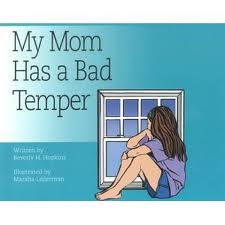
My Mom Has a Bad Temper
By: Beverly H Hopkins
Ill by: Marsha Lederman
Pub: Child & Family Press [Child Welfare League of America]

This book is more specific. This deals with the conflicting emotions common to a child [in the illustrations an adolescent girl] whose mother loses control of her temper and is abusive to the child.  What I like about this book is that even the mother is treated with respect, not made out to be a completely "bad" person, the child experiences believable family reactions and social pressures, and although social welfare etc. becomes involved the door is left often for the possibility of change.
Image credits:  clpgh.org, bookswim.com

Sunday, May 29, 2011

Caring Heart: One Less Fear

Last week's meditation was about struggling with anxiety so I decided that this week should recognize the joy of success when anxiety eases. 

One less fear.

The room looks so bright and cheerful.  It seems wonderful and yes, looks normal.  I can't remember the last time he was able to sleep without taking blankets over the windows to cover them completely.  It is so strange.  Here I am so very excited about something most parents don't even give a moment's thought.  And, they worry about things that are of almost no concern at all to me those concerns are so far down my priority list.  I see people driving around town with bumper stickers proclaiming "My 9th graders is an honor student at XYZ High School"  I have never once seen one that says "My 9th grader slept through the night last night." No one proclaims those accomplishments on bumper stickers. For him to sleep through the night is great by itself.  Do do so with the windows uncovered is an accomplishment that took far more effort than most of those 9th grade honor roll kids.  Thank you for giving him the courage to try.  To dare to un-tack that heavy blanket. To face the shadows and sounds beyond the window. Thank you for his success.  Girded with this success, let him tackle another fear, and then another.  Let this be the beginning of the end of all those fears, all those anxieties that have held him in knots for so many years. 

Excerpted from "The Caring Heart Speaks: Meditations for foster, kinship, and adoptive parents" by Gail Underwood Parker    Artwork by Anna Parker David from the book cover. 

Tuesday, May 24, 2011

Focus on Fostering: Leaving Your Children

Next month I will be leaving to go to the National Foster Parent Conference in Mobile AL.  One of the challenges of going out of town [esepcially as a single parent] is the challenge of keeping little [and not so little] ones from feeling abandoned. Even now that my kiddos are older,  their past makes them especially quick to feel abandoned even if they are old enough to know intellectually that it isn't true. They are proud that I am going, the teen in some of them is excited that I will be gone, but that small child abandoned too young, still feels adrift when I leave.  And... there still seems to be emotional payback when I return.  


I try to start way ahead to let them know it is coming.  The dates are on the family calendar and I let it drop into conversations. But it always includes that I will miss them while I am gone and that I am not gone for very long. We plan together for the time I am gone. 


I have two guidelines:
1- Because when I go I am usually very busy [at a conference or doing research] I do not promise to call at a certain time each day or to send them an email everyday.  I sometimes do call or email, but I am very careful not to promise something that might not be possible or realistic. 
2- I plan small things that will come at unexpected times and that are not expensive.


Here are three of the tricks we've use to make the preparation and transition in and out of the time away a bit smoother:

--Photos: I put a framed pictures of me by their beds, sometimes next to a book they have chosen for the sitter to read.

--Notes: I tuck little pictures or notes or both in "hiding" places for them to find while I am gone. [Under their pillow, in a sneaker, inside the freezer on the ice cream container!, in their jacket pocket, etc.]

--Surprises: I make an envelope-a-day for them to open from me. Inside is some small trinket [stickers, pack of gum, wrapped life saver,etc.] Also inside may be a privilege or a task or just a note. 

I don't do all three, but I do something. Something they can look forward to and enjoy while I am away.

What are your favorite tricks?  Share!

Image Credits: theparentzone.com,childrenonthenineties.com

Sunday, May 22, 2011

Caring Heart: Surrounded by Anxiety

A bit ago I shared a book recommendation about worries.  Here is a meditation for parents whose children live with constant anxiety. This one was written thinking of foster and adoptive children, but I know that it is not just children who have been traumatized who live with anxiety. 

A life surround by anxiety.

Oh God, she is afraid of everything.  When was the last week that went by that we didn't bump into some new or undiscovered fear of hers?  I can't even keep them straight.  Afraid of the dark. Afraid of too bright a light.  Afraid of unexpected noises.  Afraid of silence. How hard it must be to be so afraid of all the world around you.  To worry that something, anything about that world will hurt you.  What happened to her to make her so anxious?  Most children get tossed in the air and giggle with delight, never fearing for safety, totally secure.  They are so blessed.  Most children delight in the "boo" moment of peek a boo.  Do their parents even realize what a gift that is to have given their children?  That total sense of security where hide and seek is a game, not a protection strategy? What happened to this child that she feels she is the only one she can count on to keep herself safe.  Be with her, Lord.  Teach her that she can count on you.  Then perhaps slowly open her eyes to see that she now has people who will keep her safe.  Help her to let go and dare to trust.  Step by step to turn her anxieties and fears over to someone else.  Help her.  


Excerpted from "The Caring Heart Speaks: Meditations for foster, kinship, and adoptive parents" by Gail Underwood Parker    Artwork by Anna Parker David from the book cover. 

Saturday, April 30, 2011

Quick Takes: Worry management for kids


When My Worries Get Too Big ! 
by Kari Dunn Buron

This book is published by the Autism Aspergers Publishing Company but I highly recommend it for ANY child that struggles with anxiety.  No, I take that back.  I recommend it for any child period.

People whose children struggle with anxiety NEED this book.

But everyone will experience anxiety at various points in their lives, so wouldn't it be good if all children learned what to do with their worries?  Wouldn't it be good if all children had thought about and planned strategies for calming themselves??

Check it out!


PS:  For a story book that my kids used to read about worries, try  Is a Worry Worrying You?  by Ferida Wolff.

Saturday, March 19, 2011

Quick Takes: Be Prepared!

With all the news coverage about the disaster in Japan, many of you may have children who are worried, or concerned about where you live and how safe it is. I really like the graphic at right. But for responding to Japan and controlling anxiety check out the kids page FEMA put together. There is a GREAT section for kids on  what kids may feel in a disaster that can help you talk to your kids. Check it out!

  Fema Kids Page: Best site to talk about disaster feelings and planning with kids!


Of course, another way to reassure them in a practical, hands-on way is to show them that you are prepared.... great chance to review your family fire escape plan, your emergency contacts plan, and if you are of a mind to prepare for other disasters you can find plans, essential supply lists, special needs hints, and much much more on what I think is the overall  best site:   http://www.fema.gov/plan/prepare/

If you decide to go the emergency pack route... here are some places you can start if you don't want to make one as a family:


Sites for emergency pre-done packs and supplies:

redcrosssstore.org
Personal Safety Emergency Pack [short term]   $9.95

thenaturalstore.com
American Red Cross Emergency Preparedness Pack [color coded module pack] $44.99

Amazon.com
Grab-n-Go Emergency Kit  [2 person-3 day]  $39.00
Deluxe Disaster Survival Kit  [4 person-3 day] $99.99  [Emergency Zone®]  
Datrex Emergency Water supplies [5yr shelf life, 64 individual pouches] $15.81
Mountain House 72 hour Emergency Meal Kit [7yr shelf life, freeze dried 3 each:breakfast, lunch, dinner, side veggies]  $56.99


Image credits:  fema.gov, homelandsecuritynews.info, amazon.com

Tuesday, January 11, 2011

Focus on Fostering: Christina Greene and Anxious Kids

This past weekend a young girl died because she was in the right place at the wrong time.  Christina Greene was born on September 11, 2001, in fact selected as a "Face of Hope" celebrating babies born that day.  Her father, in his statement to the press, pointed out that Christina's life was bookended by two tragedies. as her father pointed out in his statement to the press. Her story and that of the other victims, the target, and assailant were all over the news and almost impossible to avoid with the periodic news breaks that happen throughout the day.

Those of us who are raising children with anxiety disorders find the nightly news a challenge.  Children who have experienced violence in their own lives are often particularly vulnerable to anxiety about becoming a victim to violence.  Helping them deal with the fears is always tough, but when a child is killed the fear is more real, making the task of calming your children even tougher. At least with television shows you can be vigilant and be prepared for challenging story lines.  But the news can spring on you with a news flash breaking into whatever your child is watching.

When a news story like this is prominent, be especially supportive, aware of mood changes or behaviors, do your best to keep the routine as normal as possible, and use your best judgement and knowledge of your child to decide if and how to address it.  If the child is school age, avoiding hearing about things like this is not realistic, so be prepared. Be alert. As with almost all the other issues common to children in foster care, the greatest gift you can give them is a sense of safety and love. There is no safety bubble we or any parents can put around our children. Hang in there.. and those of you who are comfortable, say a prayer for the families for whom this is not a distant news story, but a local story, for those for whom this is a tragedy that happened not to someone else, but to people they knew, or to them.

Image credits:  imageenvision.com and KTLA news [from the family]

Tuesday, December 14, 2010

Focus on Fostering: Hidden Holiday Traps

As the Christmas holiday gets closer and closer, don't forget to look out for hidden holiday traps for kids in care.  Remember that we often do not know what the children have experienced before coming to us.  Be mindful of mixed messages we send.  "Don't go with strangers"  but "Go, sit on Santa's lap and smile" are just one example of ways that we can certainly confuse children, and for some can terrify them.

At Christmas there are often expectations of casual kisses among friends, gifts from people who are our friends, but more like strangers to the kids. There are relatives they may never have met, and who may have little understanding of the emotional needs and issues of children in care.  These generally are children who have not experienced the public image of Christmas, the family gathered round a tree loaded with presents, happily playing with toys and games, while lovely music fills the air and good will abounds.   Try to prepare children new to the family before the fact.  Fill them in on what to expect at the caroling party or the church holiday fair, the neighborhood gathering, or even just the traditions and decorations and habits of your family.  Remember, surprises are always a risk. Prepare ye....

Image credit: moms.today.com

Tuesday, November 9, 2010

Focus on Fostering: Revelations

One of the sad realities of raising foster children is the revelations that sometimes happen.  They can give you a frightening glimpse into the childhoods [or not-so-childhoods] they experienced. I remember the time we were driving in the car and heard a nearby firetruck, sirens blaring.  The three year old in the back seat matter-of-factly said, "Oh-oh... somebody got mad and kicked their their television!"  You have to wonder when a child's first association with a firetruck is anger and violence.  Or when a six-year-old calmly explains that the reason policemen have guns is so they can kill you if they want.

Sometimes it doesn't start as an outright revelation.  Sometimes it is just a reaction that lets you know there is a memory, a story, a fear.  Like the time I was pounding an old metal ice cube tray to loosen some stubborn cubes. My new foster daughter came running from two rooms away, ears covered tightly, yelling, "Stop it! Stop it! Stop it!" and crying.  She may not have said anything about what those sounds meant to her, but it was a revelation none the less.  Needless to say, I switched to easy out plastic trays the next day. I also put her in charge of helping me empty the ice trays each day.

All we can do as foster parents is keep our ears and eyes open for windows into the pasts of our children. We can carefully not react with shock or horror that can make them feel even more isolated. Then we must work to give them a more "normal" set of expectations of the world around them. We may never be able to erase the memories or fears they arrive with, but at least we can be sympathetic and supportive while we try to help them heal and gain a happier, safer view of the world.

Image credit:  firefighter-emt.com, its.caltech.edu

Sunday, October 31, 2010

Caring Heart: A Happy Halloween

This meditation is not included in my book of meditations, but was in an earlier draft. This is for all those parents whose children are afraid. There is hope.

Today is Halloween.  I am filled with memories of when she would not even look out the window when trick-or-treaters rang the bell. Years went by when she would not, could not, enjoy going out herself, too frightened of the ghosties and goblins, however short and giggly, that roamed her familiar street.  There were so many years when he could not even go to the car once it was dark without someone holding his hand, so terrifying were the night sounds, the whispering leaves, the shadows around and within him. I wondered if they would ever have the joy of this rite of childhood, so burdened with anxiety and fear that the very thought of Halloween events terrified them.

But tonight they are going out. They are in costume and ringing doorbells. Thank you for leading them through that emotional darkness step by step to this night. What a joy to trade my old fears for the "normal" ones.  Protect them Lord.  Keep them safe from any thoughtless person jumping out to scare them, or any friends tempting them into misbehavior.  Help them be children at last. Amen.